
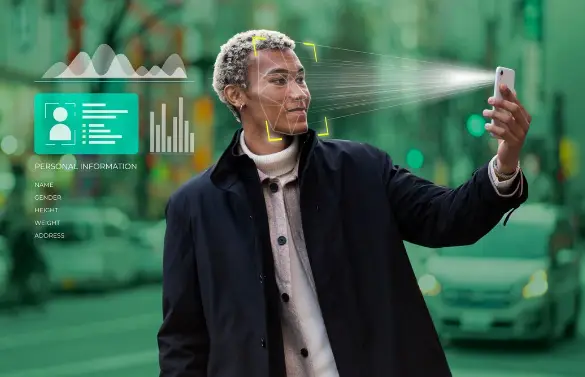

Digital marketing is no longer confined to traditional ad placements or generic outreach. The infusion of artificial intelligence (AI) and hyper-personalization has transformed the marketing landscape, enabling businesses to craft deeply customized campaigns with precision and efficiency. According to marketing strategist Evan Tynan, this tech-driven evolution presents a wealth of new opportunities—and challenges—for brands seeking to stand out in an increasingly saturated digital environment.
A New Era of Marketing Innovation
Over the past two decades, digital marketing has undergone a seismic shift. What once relied on static ads and broad-stroke messaging has matured into a data-driven ecosystem where AI helps anticipate consumer behavior and personalization tailors messaging down to the individual. Tynan emphasizes that adaptability is now a marketer’s most valuable asset. “Success today depends on how well a brand can integrate emerging technologies to deliver relevant, real-time experiences,” he says.
AI’s ability to analyze massive datasets in milliseconds has made it a cornerstone of modern marketing strategy. Meanwhile, personalization has moved beyond simple name-dropping to become a dynamic, ongoing dialogue between brand and consumer.
Artificial Intelligence: The New Marketing Powerhouse
Artificial intelligence is not just enhancing marketing—it’s redefining it. AI-powered tools automate complex tasks like content optimization, customer segmentation, and performance analytics. More importantly, they enable predictive modeling that allows marketers to forecast what consumers want before they even ask.
“AI turns reactive strategies into proactive ones,” Tynan notes. Machine learning algorithms can determine the best times to deliver content, identify patterns in customer behavior, and even adapt ad messaging based on user interactions. This real-time adaptability dramatically boosts both engagement and ROI.
Personalization: More Than Just a Name
Gone are the days when inserting a customer’s first name into an email subject line was considered cutting-edge. Today, personalization is about delivering value that feels uniquely tailored to each user.
Using behavioral data, purchase history, and engagement patterns, brands can now customize everything from product recommendations to entire website experiences. “Customers want to feel understood,” Tynan says. “And personalization is the bridge that connects data with empathy.”
When done right, personalization doesn’t just increase click-through rates—it builds trust and long-term loyalty by making every interaction feel relevant and worthwhile.
When AI Meets Personalization: A Game-Changing Duo
The intersection of AI and personalization is where digital marketing truly thrives. Together, they empower brands to create individualized experiences at scale. AI uncovers insights and trends that would be invisible to human analysts, while personalization turns those insights into meaningful action.
“Think of AI as the engine and personalization as the steering wheel,” Tynan explains. “The synergy between the two is what drives modern marketing forward.”
By delivering the right message to the right person at the right time, businesses can achieve not only better results but also deeper connections with their audiences.
Trends on the Horizon
Several emerging trends are set to further disrupt the digital marketing space. One key development is the rise of voice search. With smart speakers and virtual assistants becoming household staples, brands must now optimize content for spoken queries, a shift heavily influenced by advancements in natural language processing.
Another transformative trend is augmented reality (AR). Tynan points out that combining AR with user data enables immersive experiences—such as trying out products virtually—that make online shopping more engaging and informed.
“AR allows consumers to visualize ownership,” he says. “That kind of interaction can drastically reduce hesitation and boost purchase confidence.”
Strategy, Infrastructure, and Ethical Considerations
Despite the promise of AI and personalization, successful implementation is far from automatic. Businesses need robust infrastructure for data collection and analysis, not to mention talent capable of interpreting and acting on that data.
Moreover, there’s a growing need to navigate the ethical terrain around data privacy. Transparency, user consent, and compliance with global data regulations are non-negotiables. “Consumers are more informed than ever,” Tynan reminds us. “Trust is a brand’s most important currency.”
For companies willing to invest in the right tools and cultivate ethical, user-centered strategies, the payoff is substantial—more meaningful engagement, greater customer satisfaction, and a competitive edge that’s hard to replicate.
Final Thoughts
Evan Tynan believes the future of digital marketing lies at the intersection of technology and human insight. AI and personalization aren’t just trends—they’re the foundation of marketing strategies that resonate in a digital-first world.
“Marketers who embrace these tools not only reach their audience more effectively,” he says, “they create relationships that last.”
Also Read: Astounding Benefits of Using Ecommerce for Your Business