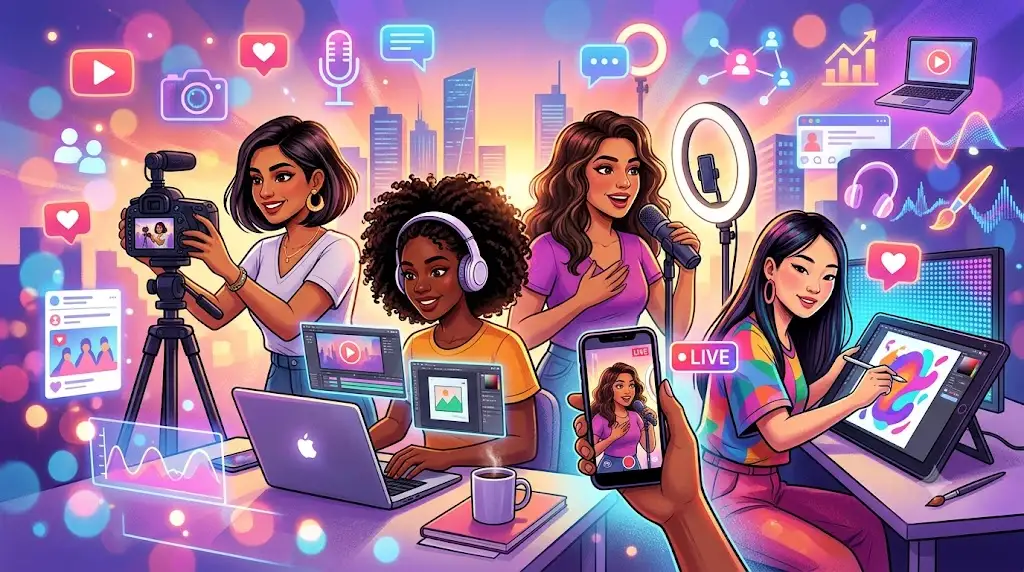

Over the past two decades, the global media ecosystem has undergone a seismic shift. The era of centralized, traditional media gatekeepers—such as legacy television networks, print magazines, and traditional talent agencies—is rapidly giving way to a decentralized, creator-first economy. At the center of this cultural and economic revolution is the dynamic rise of female content creators, digital entrepreneurs, and online leaders, often discussed in internet culture under the umbrella term “Internetchicks.”
Far from being a transient social media trend, these modern digital leaders represent a multi-billion-dollar shift in marketing, direct-to-consumer (DTC) commerce, media production, and social advocacy. Female creators now command over 60% of top-performing accounts across major platforms like TikTok, Instagram, and YouTube. They are no longer simply participating in digital culture; they are designing its rules, building multi-platform media networks, launching globally recognized physical products, and fundamentally altering consumer behavior.
This comprehensive guide offers an in-depth analysis of the rise of female digital entrepreneurs. We explore their historical evolution, the economic engines powering their business models, the specific technical strategies they use to build high-converting audiences, the operational and cybersecurity risks they navigate, and a strategic roadmap for modern creators looking to build a sustainable digital enterprise.
Key Takeaways
The Shift to Digital Ownership: Female digital creators have evolved from publishing casual daily vlogs to building high-equity direct-to-consumer (DTC) product lines, media networks, and private investment portfolios.
Direct Consumer Influence: Authentic, peer-to-peer content formats out-convert traditional corporate marketing, driving higher purchase intent and brand loyalty among younger demographics.
Disambiguating the Terminology: While search queries for “internetchicks” can occasionally surface domain confusion or third-party content aggregators, its core cultural significance represents female digital empowerment, independent publishing, and modern creative business.
Diversified Revenue Streams: High-earning creators mitigate algorithmic volatility by expanding into email newsletters, private community hubs, podcasting, and physical merchandising.
Strict Operational Security: Managing a high-visibility public brand requires proactive digital hygiene, including hardware-based authentication, metadata removal, and legal separation of personal and business identities.
1. Disambiguating the Term: Brand Power vs. Search Ambiguity
When analyzing online search trends, phrases like “internetchicks” or related search terms can present a mix of search results. To evaluate this subject accurately through a digital marketing and cultural lens, it is crucial to separate legitimate creative movements from domain-level search noise.
A. The Cultural & Creative Movement
In online discourse, the term is used broadly across tech blogs, creator forums, and digital marketing publications to describe the collective rise of ambitious, self-made female internet personalities. It encompasses female YouTubers, live streamers, fitness leaders, finance educators, and lifestyle entrepreneurs who leverage the power of the internet to create independent income streams and build global fanbases.
B. Domain Misdirection and Aggregators
As with many high-volume viral search terms, third-party domain parkers, low-quality content aggregators, and adult-oriented platforms sometimes attempt to hijack organic search traffic by registering exact-match domains. This search noise often obscures the legitimate cultural impact of the female creator economy.
C. Intellectual Property & Brand Safety
Modern creators active in the space counter unauthorized content syndication by securing trademarks, registering legal business entities (such as LLCs or Corporations), enforcing copyright via Digital Millennium Copyright Act (DMCA) takedown frameworks, and deploying automated rights-management tools to protect their brand equity.
2. The Evolutionary Timeline of Female Digital Creators
The evolution of female digital influence directly mirrors the technological progression of the internet itself—transitioning from static, text-heavy Web 1.0 environments to algorithmic, video-first Web 2.0 and Web3 ecosystems.
Phase 1: The Web 1.0 Era (2000 – 2008)
During the early days of personal blogging platforms like LiveJournal, Blogger, and MySpace, online publishing was primarily text- and photo-based. Early female bloggers began documenting their daily lives, personal style choices, and niche hobbies. These platforms were largely non-monetized, driven purely by passion and peer-to-peer connection. However, they established the fundamental principle of online personal branding: direct, unmediated communication with an audience.
Phase 2: The Video & Lifestyle Boom (2009 – 2015)
The launch of YouTube and Instagram changed the landscape permanently. High-definition video cameras and smartphones allowed creators to bring audiences directly into their homes.
YouTube Beauty & Lifestyle: Creators like Michelle Phan and Bethany Mota pioneered the “Get Ready With Me” (GRWM) and makeup tutorial formats, proving that viewers valued relatable home-recorded videos over polished commercial ads.
The Rise of Instagram Aesthetics: Early Instagram lifestyle creators focused on curated visual feeds, flat-lay photography, and fashion inspiration, laying the groundwork for the modern influencer marketing industry.
Phase 3: The Algorithmic & Short-Form Revolution (2016 – 2020)
Platforms like TikTok and Instagram Stories disrupted traditional chronological feeds by introducing hyper-personalized recommendation algorithms.
Raw Authenticity: Perfect, overly curated aesthetic feeds gave way to real, unfiltered, short-form storytelling.
Viral Distribution: Creators could reach millions of non-followers overnight based purely on content engagement rather than established follower counts.
Audio & Podcasting: Long-form audio podcasts (such as Emma Chamberlain’s Anything Goes) allowed creators to deepen relationships with fans beyond 60-second video clips.
Phase 4: Omnichannel Brand Ownership (2021 – Present)
Today’s top creators operate as media executives. Instead of relying solely on third-party platform monetization (like YouTube AdSense), creators leverage their distribution power to launch physical product lines, software applications, direct-to-consumer brands, and private venture capital funds.
Historical Evolution Matrix
| Era / Period | Primary Platforms | Main Content Formats | Primary Monetization Models | Key Industry Impact |
| 2000 – 2008 | MySpace, LiveJournal, Personal Blogs | Text posts, low-res photography, forums | Non-commercial, display banners, basic Google AdSense | Established peer-to-peer digital publishing and personal journals. |
| 2009 – 2015 | YouTube, Instagram, Tumblr | Long-form video tutorials, vlogs, curated photos | Brand sponsorships, basic affiliate links, ad revenue | Disrupted traditional beauty/fashion print magazines and TV commercials. |
| 2016 – 2020 | TikTok, Instagram Stories, Podcasts | Short-form vertical video, unscripted audio | Integrated brand deals, promo codes, product gifting | Shifted marketing spend toward micro-influencers and short-form video. |
| 2021 – Present | Substack, Shopify, Patreon, Custom Apps | Omnichannel networks, newsletter writing, live streams | DTC product lines, subscription communities, venture equity | Creators became independent brand owners, CEOs, and corporate investors. |
3. Core Content Niches Driving Massive Engagement
Female creators do not exist within a single category. Instead, they command high-engagement audiences across a wide array of specialized industries by blending expertise, personality, and entertainment value.
                                  +---------------------------------------+
                                  |   The Modern Creator Ecosystem        |
                                  +---------------------------------------+
                                                      |
         +--------------------+-----------------------+-----------------------+--------------------+
         |                    |                       |                       |                    |
+-----------------+  +-----------------+     +-----------------+     +-----------------+  +-----------------+
| Beauty, Fashion |  | Personal Finance|     | Gaming, Tech    |     | Health, Wellness|  | Social Advocacy |
| & Lifestyle     |  | & Business      |     | & Hardware      |     | & Mental Health |  | & Communities   |
+-----------------+  +-----------------+     +-----------------+     +-----------------+  +-----------------+
A. Beauty, Fashion, and Body Positivity
The beauty and fashion sectors were the first to be transformed by female digital creators. By sharing real product tests, unedited skin textures, and clothing hauls for all body types, creators forced legacy fashion brands to embrace inclusivity, varied shade ranges, and authentic marketing.
B. Personal Finance, Fintech, and Entrepreneurship
A rapidly growing segment of female creators—often called “Finfluencers”—focuses on financial literacy. They break down complex economic concepts including:
Personal budgeting frameworks and debt payoff strategies.
Stock market investing, index funds, and retirement planning.
Real estate investing and side-hustle creation.
Transparent breakdowns of creator earnings and business expenses.
By demystifying money management, these creators empower younger generations—particularly young women—to build long-term financial independence.
C. Gaming, Technology, and Consumer Electronics
Historically perceived as male-dominated spaces, the gaming and tech industries now feature influential female streamers, hardware reviewers, and esports commentators. Female creators host daily livestreams on platforms like Twitch and YouTube, publish hardware build guides, review software tools, and challenge long-standing stereotypes in the gaming community.
D. Mental Health, Mindful Living, and Self-Care
To combat the toxic pressure of online perfectionism, many creators turn their cameras toward the difficult realities of life. They host open conversations about coping with anxiety, burnout, imposter syndrome, and neurodivergence (such as adult ADHD). These raw discussions reduce stigma and foster highly supportive online spaces.
E. Social Advocacy, Environmentalism, and Policy
Female creators frequently utilize their distribution power for social good. Whether raising funds for disaster relief, advocating for sustainable fashion practices, or educating followers on civic engagement and equal rights, these leaders turn casual followers into active community participants.
4. The Macro-Economic Impact on Digital Marketing & E-Commerce
The global creator economy is estimated to be worth over $250 billion, with influencer marketing budgets taking up an increasingly large share of total corporate advertising spend. The reason for this capital shift is simple: traditional advertising is losing its effectiveness.
A. The Conversion Funnel Shift
Traditional advertising relies on top-down, interruption-based marketing (such as TV commercials or billboard ads). Modern consumers, particularly Gen Z and Millennials, actively avoid intrusive ads through ad-blockers and premium subscription services.
In contrast, creators offer an opt-in, trust-based relationship. When a creator recommends a product within an organic video, it acts as a warm word-of-mouth referral from a trusted friend, resulting in significantly higher conversion rates.
Traditional Push Advertising:
[ Brand Ad ] ----> (High User Resistance / Low Trust) ----> [ Low Conversion ]

Creator Commerce Model:
[ Authentic Content ] ----> [ Highly Engaged Community ] ----> [ High Conversion & Loyalty ]
B. The Rise of Creator-Owned DTC Empires
Recognizing their immense selling power, top-tier creators have transitioned from working solely as hired spokespeople to becoming brand founders. By cutting out middleman talent agencies and corporate distributors, creators launch Direct-To-Consumer (DTC) brands with built-in customer bases, eliminating traditional customer acquisition costs (CAC).
Examples of Creator-Led Brand Models:
Cosmetics & Skincare: Developing clean, cruelty-free beauty lines driven by organic video tutorials.
Apparel & Activewear: Launching athleisure lines designed specifically based on direct feedback from social media followers.
Consumer Goods & Food/Beverage: Building specialized packaged goods brands (such as specialty coffee or healthy snacks) that sell out within minutes of launching online.
SaaS & Digital Products: Creating software applications, media templates, and educational courses tailored to their niche communities.
5. Case Studies: Female Digital Leaders Shaping Modern Culture
Examining the operational strategies of top female creators provides valuable insights into how online visibility can be converted into long-lasting corporate enterprises.
Case Study 1: Selena Gomez – Leveraging Media Power for Social Impact
Primary Channels: Instagram (400M+ followers), Entertainment Media.
Key Business Venture: Rare Beauty.
Strategy & Impact: Selena Gomez utilized her massive global platform to launch Rare Beauty, a cosmetics brand centered around self-acceptance and mental health awareness. Pledging 1% of all sales directly to the Rare Impact Fund, she proved that a purpose-driven, community-first brand model can achieve massive commercial success while creating tangible social impact.
Case Study 2: Emma Chamberlain – Redefining Media Production & Brand Building
Primary Channels: YouTube, Spotify Podcasts, Instagram.
Key Business Venture: Chamberlain Coffee.
Strategy & Impact: Emma Chamberlain popularized an unscripted, highly relatable editing style that changed YouTube video production globally. Transitioning from traditional vlogging, she launched Chamberlain Coffee, secured high-end luxury fashion partnerships, and signed an exclusive podcast deal with Spotify, illustrating how a creator can build an omnichannel empire.
Case Study 3: Grace Beverley – Transitioning from Fitness Creator to Tech & Retail CEO
Primary Channels: Instagram, YouTube, LinkedIn.
Key Business Ventures: TALA (Sustainable Activewear) & Shreddy.
Strategy & Impact: Grace Beverley started as a student sharing fitness content online. Recognizing the demand for sustainable activewear and structured workout guides, she founded TALA and Shreddy, raising millions in venture capital funding and establishing herself as a prominent executive in the UK startup ecosystem.
6. Challenges Facing Female Creators: Security, Burnout & Platform Risks
Despite the financial rewards and creative independence of the creator economy, high-visibility digital public figures face severe operational risks that require constant management.
+-----------------------------------------------------------------------------------+
|                        CHALLENGES FACED BY DIGITAL CREATORS                       |
+-----------------------------------------------------------------------------------+
|  [Security & Privacy Risks]                                                       |
|  • Doxxing, targeted harassment, and non-consensual image distribution.           |
|  • Account hijacking, phishing attacks, and SIM-swapping attempts.                |
+-----------------------------------------------------------------------------------+
|  [Business & Operational Risks]                                                   |
|  • Algorithmic volatility and sudden demonetization on primary platforms.        |
|  • Copyright infringement and unauthorized re-uploading of content.              |
+-----------------------------------------------------------------------------------+
|  [Personal & Mental Health Risks]                                                 |
|  • Severe burnout from expectations of continuous publishing.                      |
|  • Loss of personal privacy boundaries and audience fatigue.                     |
+-----------------------------------------------------------------------------------+
A. Targeted Harassment, Doxxing, and Privacy Breaches
Female creators face disproportionately high levels of online harassment, trolling, and privacy violations compared to their male counterparts. Common security threats include:
Doxxing: The malicious public release of private information, such as home addresses, personal phone numbers, or family details.
Unauthorized Image Syndication: Third-party websites scraping social media profiles to re-publish images without permission or context.
Account Hijacking: Sophisticated phishing campaigns aimed at taking over high-value social media profiles to hold them for ransom or run scam campaigns.
B. Algorithmic Volatility and Platform Dependence
Operating an online business on third-party platforms means living at the mercy of opaque recommendation algorithms. A single update to TikTok’s distribution engine, YouTube’s monetization guidelines, or Instagram’s reach parameters can reduce a creator’s organic view count by 50% to 80% overnight. Creators who fail to build owned media channels (like email lists) remain vulnerable to sudden revenue losses.
C. Creative Burnout and the “Always-On” Pressure
Social media algorithms reward high publishing frequency. This creates a relentless cycle where creators feel forced to film every aspect of their personal lives. Over time, the line between their public persona and private identity blurs, frequently leading to severe mental health struggles, anxiety, and creative burnout.
7. Practical Digital Safety and Privacy Playbook
To build a sustainable digital career, creators must treat their personal privacy and digital security with the same care as their content strategy. Below is an actionable safety playbook designed for online creators.
Layer 1: Operational Security (OpSec) & Legal Protection
Form an LLC or Corporate Structure: Avoid doing business under your personal legal name. Register an LLC or Corporation using a professional registered agent service to keep your home address off public state databases and WHOIS records.
Use Dedicated Business Mailboxes: Never use your physical residential address for business filings, domain registrations, or brand package deliveries. Use a dedicated P.O. Box or commercial mail-receiving agency.
Separate Contact Info: Maintain dedicated business phone numbers (using VoIP services) and business email addresses that are completely isolated from your personal financial and recovery accounts.
Layer 2: Account Security & Authentication
Hardware Security Keys: Replace traditional SMS-based Two-Factor Authentication (2FA) with physical hardware security keys (such as a YubiKey) or authenticator apps (like Google Authenticator or 1Password). SMS codes are vulnerable to SIM-swapping attacks.
Password Management: Generate unique, high-entropy 16+ character passwords for every platform using a dedicated password manager. Never reuse passwords across personal and business services.
Role-Based Delegation: When hiring editors or virtual assistants, grant access via platform delegation tools (e.g., YouTube Brand Accounts, Meta Business Manager) rather than handing over raw login credentials.
Layer 3: Network & Metadata Hygiene
Remove Image Metadata (EXIF Data): Photos taken on mobile devices contain hidden EXIF data, which includes exact GPS coordinates, camera models, and timestamps. Use metadata-stripping applications before publishing raw image files online.
Use Encrypted Networks: Public Wi-Fi networks at cafés, airports, and creator conferences are vulnerable to packet sniffing. Always connect through a reputable, encrypted Virtual Private Network (VPN) when working remotely.
Delay Location Posts: Avoid posting real-time stories or checking into locations while you are still physically present. Publish location-tagged content after leaving the venue to protect your physical safety.
8. Strategic Roadmap: How to Build an Independent, Sustainable Brand
For aspiring creators looking to build an authentic online presence, success requires clear positioning, consistent execution, and long-term brand equity.
Phase 1: Brand Foundation
  ├── Identify Your Unique Niche Intersection
  └── Define Target Audience Persona & Core Values

Phase 2: Content Engine & Distribution
  ├── Establish a Sustainable Production Schedule
  └── Master One Primary Long-Form or Short-Form Platform

Phase 3: Audience Ownership & Diversification
  ├── Build an Email Newsletter List (e.g., Substack, ConvertKit)
  └── Launch a Secondary Channel (e.g., Podcast, Community Hub)

Phase 4: Monetization & Equity Building
  ├── Monetize via Strategic Brand Collaborations & Affiliate Marketing
  └── Launch Owned Direct-To-Consumer (DTC) Products or Services
Step 1: Find Your Specific Niche Intersection
Do not launch a generic “lifestyle” or “beauty” channel. The market rewards specialization. Identify the intersection of two or three unique interests or skill sets.
Generic Niche: Fashion Tips.
High-Value Specialized Niche: Sustainable Workwear Styling for Budget-Conscious Corporate Professionals.
Step 2: Establish a Consistent Content Engine
Consistency builds audience trust and feeds platform recommendation algorithms. Create a manageable weekly content calendar that prevents burnout:
1 Core Long-Form Asset per Week: A detailed YouTube video, deep-dive blog post, or podcast episode.
3–5 Short-Form Derivative Assets: Micro-clips, Instagram Reels, or TikTok highlights extracted directly from your core long-form asset.
Step 3: Own Your Audience Distribution
Social media platforms are rented real estate. Your primary objective as a creator is to convert social media followers into direct subscribers.
Launch an Email Newsletter: Offer a free digital guide, template, or exclusive weekly update to encourage followers to join your mailing list.
Build Private Community Spaces: Establish paid or private community hubs (via platforms like Discord, Circle, or Patreon) where your most dedicated supporters can interact directly.
Step 4: Develop a High-Margin Monetization Strategy
Avoid relying entirely on brand sponsorships. Diversify your revenue sources to ensure financial stability:
9. Future Trends: AI, Spatial Computing, and Web3 Communities
As technology advances, the creator economy will continue to evolve rapidly over the next decade.
1. AI-Powered Content Production Workflows
Generative AI tools are becoming standard in creator workflows. Rather than replacing human creators, AI assists with:
Automated video transcription, caption generation, and multi-language dubbing.
Instant video editing, background removal, and sound engineering.
Drafting video scripts, content outlines, and email newsletter copy.
Creators who master AI production tools can operate leaner media networks without needing large, expensive production crews.
2. Spatial Computing and Immersive Media
With the rollout of advanced spatial computing devices and VR headsets, creators will expand beyond two-dimensional smartphone screens. Expect to see virtual meet-and-greet spaces, 3D interactive product reviews, and 360-degree virtual event streaming become standard offerings for top creators.
3. Virtual Avatars and Anonymous Creators
Privacy concerns are driving the growth of VTubing (Virtual YouTubers) and digital avatars. Powered by real-time motion capture, creators can stream, educate, and entertain using fully animated digital personas, allowing them to build massive online brands while preserving their personal real-world anonymity.
10. Frequently Asked Questions (FAQs)
What does the term “Internetchicks” mean in modern online culture?
In modern social media discourse, the term refers to the global movement of influential female content creators, vloggers, live streamers, and digital entrepreneurs who leverage online platforms to build audiences, shape cultural trends, and launch successful businesses.
How do female digital creators earn a living?
Female creators monetize their work through multiple income streams, including social media ad-revenue programs, sponsored brand partnerships, affiliate marketing commissions, private membership communities, digital course sales, and owned physical product lines (DTC brands).
What are the most effective ways for online creators to protect their personal privacy?
Creators can protect their privacy by forming an LLC using a registered agent service, using dedicated commercial mailboxes for business filings, enabling hardware-based two-factor authentication (such as a YubiKey), scrubbing EXIF metadata from uploaded images, and delaying location-tagged posts until after leaving physical venues.
Is the creator economy oversaturated for new creators?
While broad categories like general beauty or casual vlogging are competitive, highly specialized micro-niches continue to see strong demand. New creators who offer clear value, maintain consistent publishing schedules, and focus on building genuine community connections can still establish highly successful online platforms.
How can creators avoid burnout while managing a public online presence?
To prevent burnout, creators should establish firm boundaries between their public persona and private life, set strict filming and editing schedules, take planned digital detoxes, use automated comment moderation filters, and build owned products that generate passive income independent of daily publishing.